|
|

|
|
|
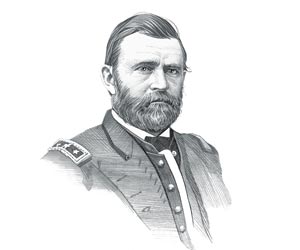
Grant's Tomb for kids: Ulysses S. Grant
Grant's Tomb for kids: The Temporary Tomb
Facts about the Grant's Tomb: Fun Facts for Kids The Grant Monument Association (GMA) was established to raise funds to build a National Monument to his memory On February 4, 1888 the GMA announced a design competition for the mausoleum “To Artists, Architects, and Sculptors”. The competition was open to Americans and Europeans. There were 65 contestants and the winning entry was chosen on January 10, 1889 The winner of the competition was an American architect named John Hemenway Duncan (1855 – 1929) It is an imposing structure, square in shape, 90 feet on each side, and of the Grecian-Doric order. Exterior: Its granite exterior is modeled after the Mausoleum of Halicarnassus that was built in 350 B.C. for King Mausolus and his wife Artemisia in Halicarnassus (Modern Bodrum, Turkey). It was classical Greek architecture The classical architecture theme continued and elements of Roman architecture, reflecting the Ionic order, was combined in the design. John H. Duncan used the Tropaeum Alpium for his inspiration. The Tropaeum Alpium was built by the Romans for the Emperor Augustus to celebrate his victory over the ancient tribes that populated the Alps. The entrance on the south side is guarded by a portico in double lines of columns, approached by steps seventy feet in width. The tomb is surmounted at a height of 72 feet with a cornice and parapet, above which is a circular cupola (a dome-like, structure on top of a building), 70 feet in diameter, terminating in a top the shape of a pyramid, which is 280 feet above the Hudson River. The interior of the structure is of cruciform form (the shape of a cross) 76 feet at its greatest length The piers of masonry at the corners being connected by arches which form recesses. The arches are 50 feet high, and are s urmounted by an open circular gallery, capped with a paneled dome which is 105 feet above the floor. Scenes of the General's career are depicted in sculptures The 8½ ton sarcophagus of brilliant reddish porphyry. Porphyry (Greek meaning "purple") is a deep purple crystallized rock that was prized for monuments and building projects in Imperial Rome. The crypt rests directly under the centre of the dome, with stairways connecting with the passage surrounding the sarcophagus The general's remains were transferred to the sarcophagus and placed in the mausoleum on April 17, 1897 The monument was dedicated 10 days later on April 27, 1897, on the 75th-anniversary ceremony of the general's birth on April 27, 1822 |
| US American History |
| 1881-1913: Maturation Era |
|
|
|
|
|
First Published2016-04-19 | |||
|
Updated 2018-01-01 |
Publisher
Siteseen Limited
| ||
|
|