|
|

|
|
|
An Eight-Nation Alliance of the United States, Great Britain, Germany, Austria-Hungary, France, Japan, Russia, and Italy was formed in 1900 to organize an intervention in China. The result of the Boxer Rebellion was a victory for the alliance.
Boxer Rebellion: Chinese Troops and Boxers
Why was it called the Boxer Rebellion?
Boxer Rebellion for kids: Causes of the Boxer Rebellion Western Powers: The Opium War (1839-1842) forced China to grant commercial concessions at first to Great Britain and then to other countries opening China to foreign trade. The industries and commerce in China were destroyed by the inflow of cheap foreign goods. The Opium War also resulted in widespread opium addiction in China. Gunboat Policy: Between 1870 to 1894, the Western powers adopted a "gunboat" policy in dealing with China using force to get what they wanted. The Chinese viewed foreigners as barbarians. Weak government in China: The ruling Qing dynasty (aka Ching dynasty) in China had been weakened by European encroachments and influence in China and further damaged by Japan's success in the First Sino-Japanese 1894-1895 War. Conflicting factions in the Qing dynasty reduced their power even further and exploitation by the westerners resulted in a rise in taxes. Anti-Christian Feelings: Chinese peasants resented the number of Christian missionaries and Chinese converts to the new Western religion which led to the emergence of the secret religious society called the "I Ho Ch’uan" (Righteous Harmony Fists), nicknamed the Boxers. The Boxers soon extended their goal to eradicate all foreign presence and influence in China and the rebellion started to spread. Natural disasters: Natural disasters were blamed on the Christians and fuelled anti-foreign feelings. These included the flooding of the Yellow River in 1898 followed by the terrible drought of 1900. Economic hardship: Economic hardship, poverty, unemployment and high taxes stirred the rebels into action resulting in the eruption of the Boxer Rebellion.
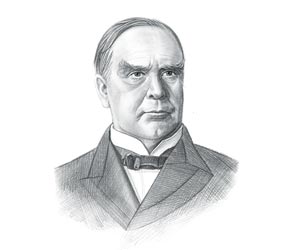
Effects of the Boxer Rebellion President McKinley tried to safeguard free trade between the United States through the Open Door policy, announced in 1899. The Qing government gave their support to the rebels which stopped their protests against the government. The Qing dynasty believed that the rebels could be used against the hated foreigners. The Boxer uprising increased and Chinese Christians and foreigners were killed in the violence. President McKinley and Secretary of State John Hay tried to safeguard Chinese territorial integrity and free trade through the Open Door policy, announced in 1899. Technological advances introduced by the Westerners such as the railroad and telegraph lines were destroyed, and foreigners were murdered. The Boxers moved from Shantung to Peking (Beijing), where the western foreigners and legations from United States, Great Britain, Germany, Austria-Hungary, France, Japan, Russia, and Italy had set up their base. Starting on 20 June 1900, Boxer forces and Imperial Chinese troops besieged the foreign diplomats In June 1890, an international military force of 2000 sailed from Tientsin to Peking The United States had favored independent action but the uprising reached such high levels of violence and destruction that President McKinley to ordered Rear Admiral Louis Kempff (United States military commander in China) to "act in concurrence with other powers so as to protect all American interests.". President McKinley then ordered the transfer of 2500 American soldiers from the Philippines to China The Battle of Peking: The joint forces of the eight nations ended the Boxer’s siege of Peking on August 14, 1900. The emperor, the Dowager Empress and members of the Qing court fled Peking in the early morning of 15 August
Significance of the Boxer Rebellion The combined military forces of the Allied Expedition were far superior to the Boxers and the Qing troops. The Boxer Rebellion had raged from Autumn 1899 - 7 September 1901. Peace was finally established in China and the Boxer protocol was signed in September 1901. Chinese resentment to the Qing dynasty became widespread and within ten years the Chinese imperial system was overthrown and the Chinese Republic was established President McKinley was criticized by Democratic politicians and newspapers who accused the president with imperialism and exceeding his constitutional authority. President McKinley argued that a president’s constitutional war powers granted him such authority. The prestige of the United States as a world power increased as a result of their actions and involvement during the Boxer Rebellion. |
| US American History |
| 1881-1913: Maturation Era |
|
|
|
|
|
First Published2016-04-19 | |||
|
Updated 2018-01-01 |
Publisher
Siteseen Limited
| ||
|
|