|
|

|
|
|
Reasons for the
Aroostook War for kids: 1783 Treaty of Paris "From the northwest angle of Nova Scotia, to wit, that angle which is formed by a line drawn due north from the source of the St. Croix river to the highlands, along the said highlands which divide those rivers that empty themselves into the St. Lawrence, and those which fall into the Atlantic ocean, to the northwestern most head of the Connecticut river." The description of the borders was very unclear. The reason for this was because the vast interior of the region had neither been explored nor mapped.
Reasons for the
Aroostook War for kids: Background History
Reasons for
Aroostook War: Background History
Reasons for
Aroostook War: Maine becomes a state
Aroostook War: Arbitration by King William I of the Netherlands
Aroostook War: The Canadian Rebellions and the Caroline Affair
Aroostook War: US Rejects the Arbitration Decision
Aroostook War: Neutrality Law of 1838 Facts about
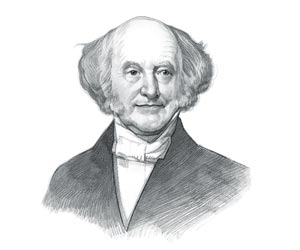
Aroostook War During the winter of 1838/39 Canadian lumberjacks arrived in the disputed Aroostook area to cut timber - as did lumberjacks from Maine The Maine legislature authorized Maine's land agent, Rufus McIntire, the Penobscot County sheriff, and a posse of volunteer militia to arrest the New Brunswick lumberjacks Some New Brunswick lumberjacks were arrested and their equipment and animals confiscated The Canadian lumberjacks raised their own posse and retaliated by seizing the land agent, Rufus McIntire, and others who had been sent to expel them In March 1839 British troops from Quebec reached Madawaska, the American sector of Aroostook Maine pressurized Congress authorized a force of 50,000 men and appropriated $10 million to address the crisis Both Maine and New Brunswick called out their militia. Maine actually sent 10,000 troops to Aroostook President Van Buren sent General Winfield Scott to Aroostook to diffuse the situation In March 1839 General Winfield Scott negotiated with an agreement the British negotiator, Sir John Harvey, agreeing a truce and a joint occupancy of the area in dispute until a satisfactory settlement could be reached The officials of Maine and New Brunswick and the British agreed to refer the dispute to a boundary commission The agreement averted all military action. Neither side wanted an expensive war that would interrupt trade No serious fighting actually took place during the Aroostook "War" although there were a couple of skirmishes and clashes between the lumberjacks The boundary was later settled by the Webster-Ashburton Treaty of 1842 |
| US American History |
| 1829-1841: Jacksonian Era |
|
|
|
|
|
First Published2016-04-19 | |||
|
Updated 2018-01-01 |
Publisher
Siteseen Limited
| ||
|
|