|
|

|
|
|
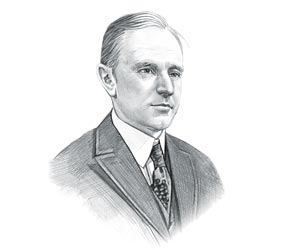
The aircraft was custom-built to compete for the $25,000 Orteig Prize for the first non-stop flight between New York and Paris. Charles Lindbergh successfully completed the solo flight in 33 hours and 30 minutes. Lindbergh's New York-to-Paris flight made him an instant worldwide celebrity. When Charles Lindbergh returned to the United States he was presented him with the Distinguished Flying Cross by President Calvin Coolidge.
Charles Lindbergh Facts for kids: Fast Fact Sheet What is Charles Lindbergh famous for? Charles Lindbergh is famous for making the first solo, non-stop flight across the Atlantic Ocean on May 20-21, 1927. He made the Transatlantic Flight in the airplane called the Spirit of St. Louis. When did Charles Lindbergh die? Charles Lindbergh died on August 26, 1974 in Kipahulu, Hawaii, United States. Where is Charles Lindbergh buried? Charles Lindbergh is buried at Palapala Ho'omau Church Cemetery, Kipahulu, Hawaii
Spirit of St. Louis
Facts for kids
Facts about
Charles Lindbergh Transatlantic Flight Charles Lindbergh was born on February 4, 1902 in Detroit, Michigan, U.S. and was the only child of Charles August Lindbergh and Evangeline Lodge Land Lindbergh. His father, Charles August Lindbergh was a congressman from Minnesota from 1907 to 1917. Charles was a loner and made few friends attending schools in in Little Falls, Minnesota, and Washington, D.C., He attended the University of Wisconsin in Madison, but was unable to settle and left after two years. He had developed a passionate interest in aviation and decided that he wanted to become a pilot. He enrolled at a flying school in Lincoln, Nebraska, and became a talented pilot with superb reflexes and was able to fly under pressure. During World War One the U.S Army had used Curtiss JN-4HM "Jenny" biplanes. After WW1 the U.S. government sold off the surplus Jennys, for a fraction of their initial cost. This enabled pilots to purchase JN-4s (Jennys) for as little as $200. Charles Lindbergh purchased his own plane. Like many of the early aviators Charles Lindbergh set up business as a Barnstormer and became a daring stunt pilot thrilling the crowds with his daring aerobatic maneuvers and death-defying stunts. He wanted to perfect his flying techniques and enlisted in Army flying school. From the group of 104 flying cadets, he graduated first in his class. In 1925 when the Kelly Act was passed that authorized postal officials to contract with private airplane operators to carry U.S. Air Mail. Lieutenant Charles A. Lindbergh moved to St. Louis where he was appointed to the prestigious role of Chief Airmail Pilot for Robertson Aircraft. Charles Lindbergh still wasn't satisfied and wanted a new challenge. He wanted to win the Orteig Prize, a $25,000 reward offered by New York hotel owner Raymond Orteig to the first aviator to fly non-stop from New York City to Paris Other aviators had the same idea including Rene Fonck, Clarence Chamberlin, Noel Davis, and Richard Byrd who were considered the greatest flyers of the day. Charles Lindbergh contacted influential people in St. Louis who had an interest in flying and promoting aviation who might be interested in becoming sponsors. Earl Thompson, Major Albert Bond Lambert, Harry Hall Knight and Harold Bixby believed that a successful flight could put St. Louis on the aviation map and agreed, with some other backers, to provide financial backing for the plan. The sponsors formed the Spirit of St. Louis Organization Charles Lindbergh failed to obtain an aeroplane from several large airline companies but eventually in 1927 he received an offer from Ryan Airlines, a relatively unknown company in San Diego. Donald Hall, the design engineer at Ryan, together with Charles Lindbergh worked tirelessly with the team at Ryan Airlines to build the Spirit of St. Louis biplane. The Spirit of St. Louis was custom-built to fit Charles Lindbergh in just 60 days and cost $10,580. It was a single engine, single-seat monoplane designed for flying solo. Fuel capacity was their major priority, so much so that the biplane was nicknamed "the flying gas tank". April 28, 1927 the Spirit of St. Louis was ready for its first test and it functioned perfectly. He flew the plane to New York and was greeted by a media frenzy surrounding all the competitors who had entered the flying race. Charles Lindbergh and the Spirit of St. Louis left Roosevelt Field 7:30am on May 20, 1927. He was flying solo, completely alone in the terrifying journey that was ahead of him. Flight Plan: The flight plan from New York initially followed Long Island, New England, over the Atlantic to Nova Scotia, then over the Atlantic again over Placentia Bay to Newfoundland. From Newfoundland Charles Lindbergh faced flying solo in the darkness and icy winds for 15 hours over the Atlantic Ocean. A magnetic storm played havoc with his compass and he became extremely disorientated. He then spotted a seagull and a small fishing boat and knew that he would soon sight the coast of Ireland. He passed Dingle Bay in Ireland and headed on to Paris. After thirty-four hours flying solo he landed at Le Bourget field near Paris on the night of May 21, 1927 Charles Lindbergh was greeted by a cheering crowd, it was the start of the type of reception he would get wherever he went - Lindbergh's New York-to-Paris solo flight had made him a worldwide celebrity. On his return to the United States he was awarded the Distinguished Flying Cross by President Calvin Coolidge. He married Anne Morrow, the daughter of Dwight Morrow, the U.S. ambassador to Mexico in May 1929 and they had a son on June 22, 1930. Sadly, Charles Lindbergh's happy life was devastated when his two-year-old son, Charles Augustus, Jr., was kidnapped from his home near Hopewell, New Jersey, and a short time later was found murdered on March 2, 1932. Anne and Charles went on to have another four children following WW2. Charles Lindberg went on to write several books about his life, including The Spirit of St. Louis (1953), describing his solo flight to Paris which gained him gained him a Pulitzer Prize. |
| US American History |
| 1913-1928: WW1 & Prohibition |
| The Lindbergh Kidnapping |
| Early US Aviation |
|
|
|
|
|
First Published2016-04-19 | |||
|
Updated 2018-01-01 |
Publisher
Siteseen Limited
| ||
|
|