|
|

|
|
|
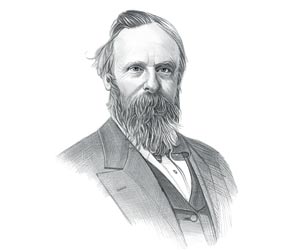
The strike was over by August 5, 1877. The Great Railroad strike was run by disorganized mobs and President Hayes ordered federal troops to quell the riots and protect the mail.
Causes of the
Great
Railroad Strike of 1877
Great
Railroad Strike of 1877 for kids The Great Railroad Strike of 1877 was a national crisis and involved more than 100,000 railway workers in 14 states. More than half the freight on the nation’s 75,000 miles of track stopped moving. Hundreds of people were injured, over 100 people died and more than 1000 people were jailed and It is estimated that $5 million of property was destroyed during the riots. Cause: The Great Railroad Strike occured during the economic depression known as the Panic of 1873 that lasted for six years and lead to extreme financial hardships, destitution, civil unrest, demonstrations, protests and the first nationwide strikes. Cause: The working man was suffering real hardship and animosity grew towards the profiteering industrialists who were cutting wages and the workforce to realize profits. Cause: Poor working conditions and dangerous hazards of the job led to injuries and deaths of men working on the railroads. The Great Railroad strike erupted in 1877 and became the first nationwide strike in the United States. Tensions in the country were running high, people felt insecure and their jobs and lifestyles were unstable. The first major issue occurred in May 1877 when the Pennsylvania Railroad imposed a second 10% wage cut in two years. In July 1877 the Baltimore and Ohio Railroad (B&O) followed suit and made their second 10% wage cut in two years. It also cut the working week to just three days. And just to add insult to injury, the Baltimore and Ohio Railroad also announced a 10% dividend payment to their investors. The railway workers were incensed and started strike action in in Martinsburg, West Virginia on July 14, 1877. 40 furious locomotive firemen walked off the job. They were joined by other workers who bottled up 13 locomotives and 1,500 freight cars in Martinsburg. By the end of the first day, railway workers blockaded freight trains near Baltimore and in West Virginia. The strikers only allowed the passenger traffic to get through. Word of the protests and the strike action including their blocking of traffic movement quickly spread across the nation. Strikes and protest actions started in Baltimore, Pittsburgh, Chicago, Kansas City, St. Louis, and San Francisco. The protests involved large mobs of angry men and women. Governors in Pennsylvania, Maryland and West Virginia called out their state militias. The strike protests turned into riots. The Brotherhood of Engineers, Conductors and Firemen had done nothing to protect its members Baltimore: In Baltimore the strikers were confronted by armed state militia with their bayonets fixed. The militia opened fire and ten protestors were killed. The mob went wild, news of the shootings spread and the number of protestors grew to over 14,000. A passenger car was set on fire and a train was crashed into freight cars On July 19 President Hayes sent Federal troops to Martinsburg armed with Gatling guns and Springfield rifles. The strikers were no match for such a show of force. Cumberland, Maryland: The strikers stopped passenger and freight traffic. The governor sent out the militia and there were fights in the street. Fires were started by rioters and the militia fired on the mob killing 10 strikers and injuring a further 25. President Hayes sent federal troops to restore order. Pittsburgh, Pennsylvania: Pittsburgh saw some of the most violent incidents in which building and over 100 locomotives and 1000 passenger and freight cars were destroyed. The strikers armed with stones, started fires and attacked the militia, who retaliated by shooting and bayoneting the rioters. 20 strikers were killed and 29 injured. Reading, Pennsylvania: The scene of the Reading Railroad Massacre in which 10 people were killed by the Pennsylvania State Militia Chicago, Illinois: Large mobs of rioters protested in Chicago causing chaos and damage. They were joined by coal miners, who also went on strike (also refer to the Molly Maguires). The Workingmen's Party of the United States (WPUS) became extremely active and organized demonstration that drew vast crowds. The rioters were fought by the state militia and police boosted by vigilantes. The newspapers referred to the protests as a "Reign of Terror", likening events to the French Revolution St Louis, Missouri: The railway workers strike took on massive proportions when the St. Louis Workingman's Party called for solidarity from other workers and turned into the first general strike in the United States. Each of the strikes were quelled by Federal troops, the riots had lasted for about 1 month. The latter part of the 1800's would see the rise of Unions and more strikes. It set the scene for other important events including the 1886 Haymarket Square bombing in Chicago, the 1892 Homestead Steel Strike near Pittsburgh and the 1894 Pullman Strike. The Great Railroad Strike of 1877 was a major event in the history of the United States and could justifiably be called the beginning of the 'Industrial Revolution'. |
| US American History |
| 1866-1881: Reconstruction Era |
|
|
|
|
|
First Published2016-04-19 | |||
|
Updated 2018-01-01 |
Publisher
Siteseen Limited
| ||
|
|