|
|

|
|
|
Belknap resigned his position but revelations led to his Impeachment but he was acquitted on the grounds that the Senate lacked jurisdiction after Belknap's resignation had been accepted.
Belknap Bribery Scandal History for kids: President Grant and the Scandals of his
Administration
Belknap Bribery Scandal Facts for kids
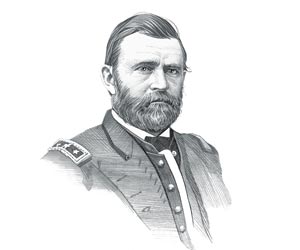
William Worth Belknap was a lawyer and a friend of
Grant. He had served as Major General in the American
Civil War
He had been appointed Internal
Revenue tax collector in Iowa by President Johnson after
the Civil War and remained in this position until
President Ulysses Grant appointed him to head the War
Department in 1869.
He had held his cabinet post for
nearly eight years from October 25, 1869 – March 2, 1876
before the scandal erupted
He was known for his extravagant
lifestyle and giving expensive parties. People wondered
how he could afford the luxuries on his $8000 a year
salary
Political corruption was rife and a
House of Representatives’ committee started to
investigate the activities of the U.S. Secretary of War
and his luxurious lifestyle
On February 29, 1876, Congress
launched an extensive investigation run by Hiester
Clymer
The committee uncovered evidence of
widespread corruption in which it became clear that
William Belknap had accepted bribes from companies with
licenses to trade on the reservations of many Native
American Indian tribes.
Belknap had been given sole authority
to appoint Indian post-traderships by Congress
He abused the power of his position
and accepted illicit kickbacks or bribes in exchange for
making lucrative Indian tradership appointments
The corruption had started in 1870
when he (and his first and then second wife) took
quarterly payments for the Fort Sill "tradership"
position awarded to Caleb Marsh and a sutler called John
Evans. Caleb Marsh gave kickbacks to the Belknaps
totally of $20,000.
Fort Sill, in Oklahoma Indian
Territory, afforded a highly lucrative military
contract. Belknap went on to empower the traderships
even further by giving them a virtual monopoly over
trade.
Sutlers, men who sold provisions to
the soldiers, were appointed to operate in the Military
and Indian traderships
The US Soldiers stationed at forts
operated by Belknap appointed sutlers could only buy
supplies through the authorized tradership. This
monopoly enabled the sutlers to charge highly inflated
prices for the necessary supplies
The sutlers also made even more
profits from Native American Indians by selling rifles
as well as basic supplies.
Rumors of the corruption led to a
political scandal. The leader of the investigating
Committee, Hiester Clymer, was a staunch Democrat who
vehemently opposed Republican Reconstruction of the
Grant administration
Caleb Marsh gave evidence that
Belknap had accepted payments in return for trading
partnerships between himself and the sutler John Evans.
In light of the evidence stacked
against his Secretary of War, President Grant asked for
his resignation, which was given
Despite his resignation from the
cabinet the Committee started impeachment proceedings.
As he resigned before the Impeachment
trial (as would Nixon in later years) he was acquitted
on the grounds that the Senate lacked jurisdiction after
his resignation had been accepted. No civil charges were
made against him.
He returned to his former job as a
lawyer and left the political arena. His actions
creating the
Indian Ring |
| US American History |
| 1866-1881: Reconstruction Era |
|
|
|
|
|
First Published2016-04-19 | |||
|
Updated 2018-01-01 |
Publisher
Siteseen Limited
| ||
|
|